BSNL is India’s state-owned mobile network, known for reaching remote corners where private networks don’t go, but for almost every tourist, it is the worst choice for a short trip.
Unless you are traveling to extremely isolated villages, top private operators like Jio, Airtel, and Vi offer significantly faster speeds, smoother registration, and much better convenience. In this guide, you’ll learn why BSNL usually isn’t worth the hassle, the few remote places where it actually comes in handy, and which alternatives (like local private SIMs or travel eSIMs) will save you time and stress on your trip.
In this article
What Is BSNL in India?
BSNL (Bharat Sanchar Nigam Limited) is India’s government-run telecom operator.
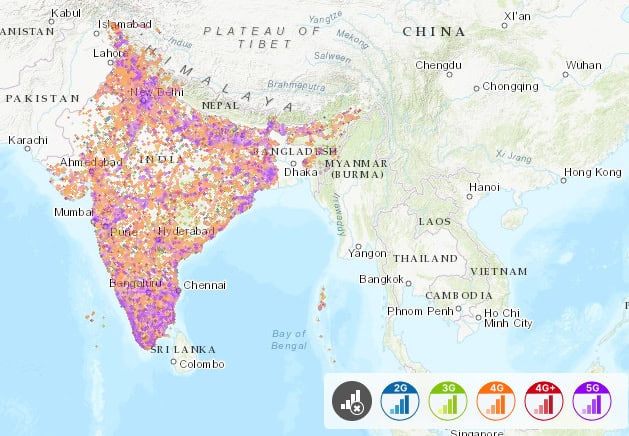
Operating nationwide across all 22 telecom circles, BSNL historically lacked a direct presence in major hubs like Mumbai and Delhi. While BSNL has begun taking over mobile services in those cities by sharing Vodafone Idea’s (Vi) network infrastructure, real-world traveler feedback in metropolitan areas remains poor, with frequent signal dropouts and no 5G access.
How Fast and Reliable Is BSNL’s Network?
BSNL is currently the slowest and least reliable of India’s four major networks, with no functional 5G network.
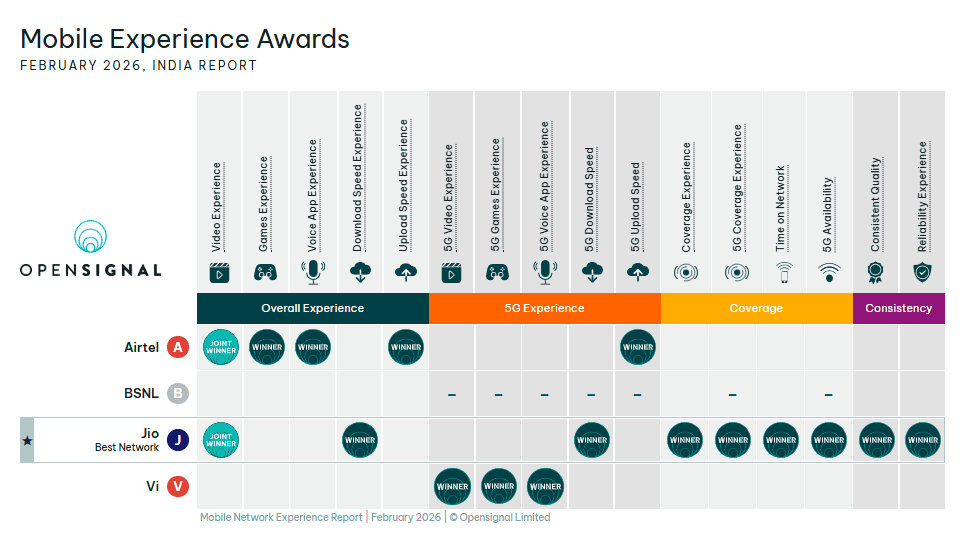
According to independent testing from Opensignal, BSNL’s performance falls behind every other operator across the board. It placed last in every single measured category, including download speeds, upload speeds, connection reliability, and network consistency, trailing far behind private competitors like Jio, Airtel, and Vi.
Also, BSNL registered zero functional 5G coverage, meaning you will be limited strictly to its legacy 3G and 4G networks.
Traveler reports across dozens of Indian states consistently describe BSNL’s data as frustratingly slow for daily tasks like maps, ride-hailing, or web browsing. So, unless you are traveling to an ultra-remote region where BSNL is literally the only option available, its network speeds and reliability will likely disappoint.
BSNL mobile network performance compared others in India (Source: Opensignal)
BSNL prepaid plans are very cheap, ranging from ₹99 (~$1.20 USD) to ₹225 (~$2.70 USD) for short stays.
Common standard plan options include:
₹99 Plan: Valid for 14 days (includes 50MB total data).
₹147 Plan: Valid for 24 days (includes 5GB total data).
₹225 Plan: Valid for 28 days (includes 2.5GB data/day).
Note: You will also pay a small one-time SIM activation fee (~₹20). Once purchased, tele-verification can take anywhere from 30 minutes to 24 hours before your line is active.
Where Can You Buy a BSNL SIM?
You can only buy a BSNL SIM by visiting an official government Customer Service Center (CSC) or franchised shop inside a city.
Unlike Jio, Airtel, and Vi, BSNL does not operate tourist counters at major international airports (such as Delhi, Mumbai, or Bangalore). You will have to wait until you reach the city center during standard business hours to find an open store.
Is a BSNL eSIM Worth Trying?
No. BSNL’s eSIM availability is highly inconsistent and unreliable.
While BSNL advertises eSIMs, traveler experiences vary wildly. Some regional service centers refuse to issue eSIMs altogether, claiming the service is paused, while others occasionally process them. You should not rely on getting a BSNL eSIM for your trip.
What Do You Need to Buy a BSNL SIM?
Officially, foreign tourists only need a physical passport, a valid Indian visa, and local address proof (like your hotel booking) to buy a SIM.
Under Indian telecom rules (TRAI), Aadhaar biometric IDs are only mandatory for Indian residents. However, BSNL comes with an important warning:
Store-Level Hassles: Foreign travelers frequently report that staff at BSNL government centers incorrectly demand an Aadhaar card anyway and refuse service without one. This issue is far less common at private Jio, Airtel, or Vi stores.
The 90-Day Rule: Any tourist SIM registered on a foreign passport is valid for a maximum of 90 days from activation. It cannot be extended; returning to India later requires a brand-new SIM registration.
Should You Just Buy a Gigago eSIM Instead?
Yes. Buying a travel eSIM for India from Gigago is by far the easiest and most stress-free option for traveling in India.
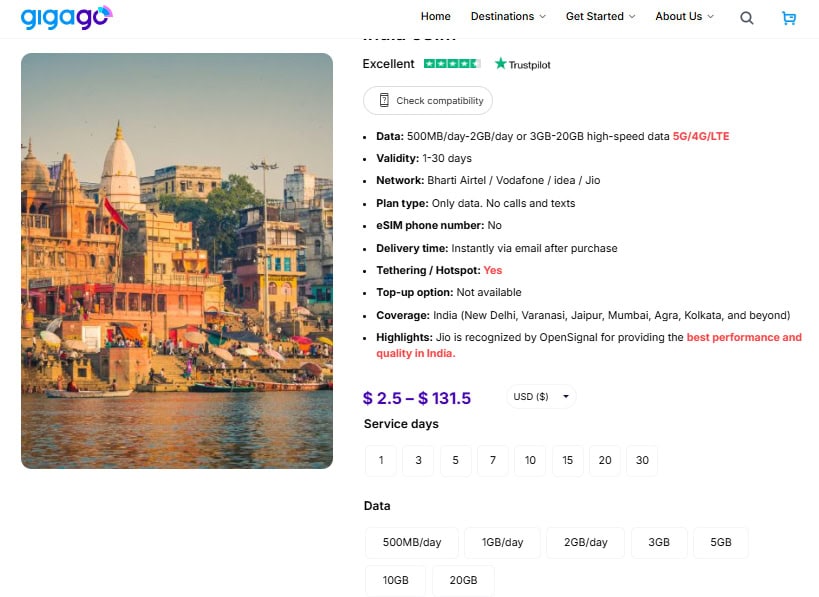
Gigago India eSIM plans start from around $2.20 USD, with customizable validity periods ranging from 1 to 30 days. You can choose between daily data allowances, fixed total data packages, or unlimited data plans depending on your trip length.
India eSIM by Gigago is alternative to BSNL SIM card
It automatically connect to India’s leading private networks, including Jio, Airtel, or Vi, giving you access to fast 4G/LTE speeds as soon as you land.
The good thing about buying this eSIM is that you can activate your plan instantly on your phone without hunting down city shops, handing over physical passport copies, or arguing over Aadhaar ID requirements.
No. Jio, Airtel, and Vi are far superior in speed, network reliability, airport availability, and customer service. BSNL is only useful as a backup in extreme rural areas.
Do foreign tourists need an Aadhaar card to buy a SIM in India?
Legally, no. A passport and valid visa are sufficient by law. However, some BSNL shop staff incorrectly demand Aadhaar IDs from foreign tourists, making Jio or Airtel much easier alternatives.
How long does an Indian tourist SIM stay active?
All tourist SIMs registered on a foreign passport automatically expire after a maximum of 90 days.
Does BSNL have 5G coverage?
No. BSNL currently has no active 5G network for public use.
Most Indian travelers heading to Thailand either recharge a Jio/Airtel roaming pack or plan to grab a physical SIM at the Bangkok airport. Both work, but neither is the cheapest way to stay connected anymore. A Thailand eSIM costs a fraction of what Jio or Airtel charge for international roaming, gives you significantly more data, […]
Traveling to New Delhi, India, one of the most essential tasks for any traveler is to buy SIM card in New Delhi to stay connected during your trip. This detailed guide is here to give you great tips and practical advice when you buy SIM card in New Delhi. It’ll make sure you breeze through […]
Foreign visitors to India landing at Chennai International Airport (MAA) cannot buy a new tourist SIM card on-site. There are currently no retail counters selling new SIM cards to arriving international passengers inside the airport terminals. This guide explains about Chennai Aiport (MAA) SIM cards, what telecom services actually exist at MAA, why Indian SIM […]
This article provides a guide for buying a SIM card at Delhi Airport (Indira Gandhi) to highlight the process, options, and tips for travelers arriving at Delhi Airport.
Getting online right upon arrival is vital for many travelers visiting India, and buying a SIM card at Mumbai airport (BOM) (Chhatrapati Shivaji Maharaj) makes staying connected easy.